Decarbonisation journey

Port and Maritime Intelligence
This integrated maritime intelligence environment helps ports, terminals, vessel operators and logistics providers improve port-call predictability, berth utilisation, vessel turnaround and emissions performance.
Port calls require close coordination between shipowners, terminals, port authorities, pilots, tug operators, mooring teams, age
This integrated maritime intelligence environment helps ports, terminals, vessel operators and logistics providers improve port-call predictability, berth utilisation, vessel turnaround and emissions performance.
Port calls require close coordination between shipowners, terminals, port authorities, pilots, tug operators, mooring teams, agents, cargo handlers and landside transport providers. Fragmented data and inconsistent arrival estimates can cause berth conflicts, resource underutilisation, congestion, vessel waiting and unnecessary fuel consumption.
The solution creates a shared operational picture by converting real-time maritime data into predictive, actionable intelligence. It enables users to:
- Produce continuously updated vessel arrival and departure estimates
- Optimise berth allocations and port-call schedules
- Identify resource constraints, conflicts and operational risks
- Coordinate activities through shared events, tasks and status updates
- Support Just-in-Time arrival and virtual-arrival processes
- Integrate predictions and alerts into existing operational systems
- Measure port performance, waiting times and associated emissions
More accurate predictions improve the deployment of pilots, tugs, labour, cranes, cargo-handling equipment and landside transport. Ship operators can reduce speed when berths are unavailable, avoiding fast sailing followed by anchorage.
Technology Description
The cloud-based architecture aggregates and processes data from multiple sources, including:
- Terrestrial and satellite AIS
- Historical vessel movements and port-call events
- Vessel characteristics and operating patterns
- Port Community Systems and terminal operating systems
- Weather, wind, waves, currents and visibility
- Pilotage, towage, berth and resource availability
- Port infrastructure, geofences and sensor data
- Operational tasks, events and stakeholder updates
Machine-learning models analyse historical and real-time data to predict vessel arrivals and future port-call milestones. Estimates can cover pilot boarding areas, port boundaries, anchorages and berths. Predictions are recalculated when vessel speed, route, traffic, weather or port conditions change.
A visual planning environment supports berth allocation, vessel movements and resource scheduling. Automated alerts identify conflicting bookings, operational delays, unsafe arrangements and changes requiring intervention.
Application programming interfaces and system connectors allow predicted timestamps, alerts and events to flow into existing port, terminal and fleet-management platforms. Role-based access controls protect commercially sensitive information while enabling controlled collaboration between stakeholders.
Contribution to Decarbonisation
The principal emissions-reduction mechanism is Just-in-Time arrival. When berth availability is known earlier and with greater accuracy, vessels can reduce speed during the voyage instead of maintaining higher speed and waiting at anchor. Because propulsion power and fuel consumption increase disproportionately with speed, controlled speed reduction can deliver meaningful fuel and CO₂ savings.
Additional decarbonisation benefits include:
- Reduced anchorage and vessel waiting
- Lower auxiliary-engine consumption
- Fewer unnecessary accelerations and schedule-recovery manoeuvres
- Shorter, more predictable port stays
- Better coordination of pilots, tugs and mooring services
- Improved utilisation of cranes and cargo-handling equipment
- Reduced truck queuing and landside congestion
- Better emissions measurement and reporting
By comparing predicted and actual port-call timestamps, operators can identify delays, quantify avoidable emissions and measure improvement. The technology therefore provides both the intelligence needed to reduce emissions and the data required to demonstrate the results.
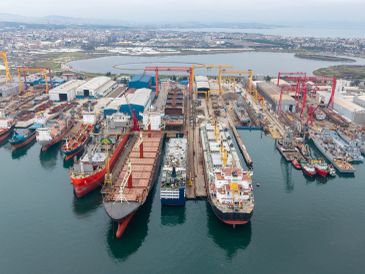
AI-Powered Fleet Optimisation for Profitable and Low-Carbon Shipping
This AI-powered fleet optimisation technology helps shipowners, operators and commercial teams improve fleet utilisation, reduce operating costs and emissions, and maximise the profitability of cargo assignments across multiple vessels. Traditional fleet planning often relies on manual scheduling and sequential assessment of cargo opportu
This AI-powered fleet optimisation technology helps shipowners, operators and commercial teams improve fleet utilisation, reduce operating costs and emissions, and maximise the profitability of cargo assignments across multiple vessels. Traditional fleet planning often relies on manual scheduling and sequential assessment of cargo opportunities. As fleet size and operational complexity increase, identifying the most profitable combination of vessels, cargoes, routes and schedules becomes more difficult. Vessel availability, laycan windows, current locations, existing commitments, port operations and voyage costs must all be considered together.
The solution evaluates these variables simultaneously and creates optimised fleet schedules, enabling operators to:
- Assign cargoes to the most suitable vessels
- Optimise routing and voyage sequencing across the fleet
- Maximise fleet net profit
- Reduce sailing distance, fuel consumption and emissions
- Account for vessel capacity, availability and existing commitments
- Evaluate laycan windows and late-arrival risk
- Include voyage, port and waiting costs
- Improve vessel utilisation and reduce ballast movements
- Compare alternative cargo-allocation scenarios
This transforms complex fleet and cargo data into practical decisions for chartering, operations and commercial teams. Instead of assessing voyages individually, the technology considers the impact of each cargo assignment across the entire fleet.
Technology Description
The technology combines fleet and cargo data, advanced optimisation algorithms, operational cost modelling and planning tools to create optimised vessel schedules.
Operators select the vessels and cargo opportunities to be evaluated. The optimisation service then considers:
- Existing cargo commitments
- Cargoes already onboard
- Mandatory voyage legs and port calls
- Current vessel locations
- Vessel speed and capacity
- Laden and ballast speeds
- Fuel types and fuel costs
- Loading and discharge requirements
- Port and waiting costs
The system can optimise from vessels’ actual locations rather than predefined ports, allowing the plan to reflect real operating conditions.
The optimisation engine evaluates multiple cargo assignments and vessel itineraries to identify the combination that best meets the selected commercial objective.
The commercial model can incorporate:
- Sea-voyage fuel costs
- Port operating costs
- Waiting costs
- Laycan late-arrival risk
- Cargo revenue
- Towage, pilotage and fairway fees
- Alternative fuel profiles
- Demurrage and despatch
- Time Charter Equivalent metrics
The optimiser determines which cargoes should be allocated to which vessels and in what sequence. It can also assess whether rejecting a cargo may produce a better overall fleet result.
The output provides an optimised itinerary for each vessel, including activities, locations, arrival and departure times, speeds, distances, cargo onboard and associated costs.
Contribution to Decarbonisation
Fleet optimisation reduces emissions by minimising unnecessary sailing, waiting and inefficient vessel deployment.
Rather than treating each voyage as a separate decision, the technology optimises cargo allocation across the fleet while considering vessel location, availability, capacity, commitments and port constraints.
Key decarbonisation benefits include:
- Lower fuel consumption
- Reduced CO₂ emissions
- Reduced ballast sailing
- Improved vessel utilisation
- More efficient cargo allocation
- Better coordination of voyage and port schedules
- Reduced waiting and operational inefficiency
- Support for alternative fuel profiles
- Quantification of emissions alongside commercial optimisation
Because fleet routing and cargo allocation directly influence distance sailed and fuel consumed, better fleet-level decisions can create immediate commercial and environmental benefits without major vessel modifications.
The result is a scalable approach to maritime decarbonisation: allocating the right cargo to the right vessel, at the right time and in the right sequence — improving profitability while reducing fuel consumption and emissions.
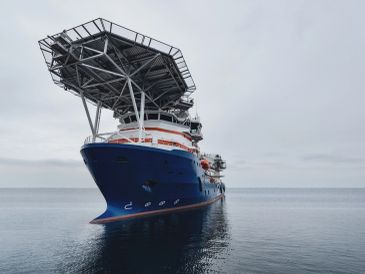
AI-Powered Offshore Fleet Performance & Decarbonisation
AI-Powered Offshore Fleet Performance & Decarbonisation
This technology helps offshore fleet operators and charterers reduce fuel consumption, lower operating costs, improve vessel utilisation and reduce emissions by turning operational data into practical performance actions. Offshore fleets such as PSVs, AHTS vessels, SOVs and other support vessels operate across transit, standby, idle and
This technology helps offshore fleet operators and charterers reduce fuel consumption, lower operating costs, improve vessel utilisation and reduce emissions by turning operational data into practical performance actions. Offshore fleets such as PSVs, AHTS vessels, SOVs and other support vessels operate across transit, standby, idle and offshore activity modes, each with very different fuel-consumption profiles. Inefficient engine use, excessive idle time and inconsistent operating practices can therefore create substantial unnecessary cost and emissions.
The technology consolidates fleet-wide operational data and applies analytics, AI and offshore operational expertise to identify inefficiencies and improvement opportunities. It enables operators to:
- Monitor fuel consumption across vessels and activities
- Benchmark vessel and fleet performance
- Analyse transit, standby and idle time
- Identify excessive consumption and inefficiencies
- Improve engine and generator utilisation
- Monitor vessel availability and utilisation
- Establish performance baselines
- Quantify fuel-saving opportunities
- Track CO₂ emissions
- Support corrective actions and operational best practices
Rather than simply displaying vessel data, the solution helps offshore teams understand where performance is being lost and what actions can improve it.
Technology Description
The technology combines vessel data integration, automated validation, AI-powered analytics, fleet benchmarking and specialist offshore operational expertise.
Data can be collected from:
- Daily and noon reports
- AIS data
- Fuel monitoring systems
- Onboard sensors
- Engine and machinery systems
- Operational and logistics records
The platform aggregates and standardises this information into a consistent fleet-wide dataset. It then analyses vessel activity and fuel consumption against operational profiles and performance baselines.
Key performance areas include:
- Fuel consumption
- Transit efficiency
- Idle and standby time
- Engine and generator utilisation
- Vessel availability
- Cargo and bulk operations
- Contractual performance
- Emissions performance
AI-powered models identify trends, anomalies and potential inefficiencies, while operational best-practice frameworks help convert these insights into practical actions.
A key feature is continuous performance improvement: inefficiencies are identified, corrective actions are implemented, and results are measured against established baselines.
Contribution to Decarbonisation
The technology supports offshore fleet decarbonisation primarily by reducing unnecessary fuel consumption through improved vessel behaviour and operational efficiency.
Instead of requiring immediate vessel replacement or major capital investment, it focuses on extracting greater efficiency from existing fleets through better data, benchmarking and operational practices.
Key decarbonisation benefits include:
- Lower fleet fuel consumption
- Reduced CO₂ emissions
- Reduced unnecessary engine running
- Improved transit efficiency
- Reduced idle and standby consumption
- Better generator utilisation
- Improved vessel utilisation
- Identification of inefficient vessel behaviour
- Measurement of fuel and emissions savings
- Continuous monitoring of environmental performance
For offshore fleets, relatively small efficiency improvements repeated across multiple vessels and operating days can generate significant cumulative savings.
The result is a scalable approach to offshore fleet decarbonisation: combining reliable vessel data, AI-powered analysis and operational expertise to reduce fuel consumption, improve utilisation and make every vessel operate more efficiently.

Ocean Freight Visibility and Predictive Intelligence
AI-Powered Offshore Fleet Performance & Decarbonisation
This technology gives cargo owners, freight forwarders and logistics teams end-to-end visibility of containerised ocean shipments. It replaces fragmented carrier updates, spreadsheets and manual tracking with predictive, exception-based intelligence.
The solution enables users to:
- Track containers, vessels and shipment milestones across mul
This technology gives cargo owners, freight forwarders and logistics teams end-to-end visibility of containerised ocean shipments. It replaces fragmented carrier updates, spreadsheets and manual tracking with predictive, exception-based intelligence.
The solution enables users to:
- Track containers, vessels and shipment milestones across multiple carriers
- Receive predicted arrival and departure times weeks in advance
- Identify delays, rollovers, transhipment risks and port congestion
- Prioritise shipments according to operational and commercial impact
- Coordinate customs clearance, container collection and onward transport
- Reduce demurrage, detention, storage and emergency-expediting costs
- Compare carrier and trade-lane performance
- Calculate shipment-level greenhouse-gas emissions
Predictive intelligence allows supply-chain teams to intervene before disruption affects production, inventory or customer commitments. More reliable arrival forecasts also improve warehouse, labour, trucking and manufacturing planning.
Technology Description
The cloud-based architecture combines carrier, vessel, port, terminal and customer data within a unified analytical environment. Inputs can include:
- Carrier schedules and shipment milestones
- Container and booking references
- AIS vessel-position data
- Vessel movements and historical voyage patterns
- Transhipment and rollover events
- Port and terminal congestion
- Orders, contracts, invoices and free-time allowances
- Customer-defined operational and service-level requirements
Domain-specific machine-learning models analyse historical and live data to generate predicted ETAs and ETDs. These forecasts are continuously recalculated as vessel movements, schedules, port conditions and container events change.
The system uses exception-management logic to distinguish routine schedule changes from events requiring action. Automated alerts can identify containers at risk of missing connections, exceeding free time, disrupting production or incurring demurrage and detention charges.
Application programming interfaces allow tracking data, predicted milestones, alerts and carbon calculations to be embedded within transport-management, enterprise-resource-planning and customer-facing systems. Analytical tools can evaluate carrier reliability, trade-lane performance, dwell time, freight costs and emissions at shipment or portfolio level.
Contribution to Decarbonisation
The technology supports decarbonisation by connecting shipment visibility with carbon measurement and operational decision-making.
Shipment-level CO₂e calculations can be accessed through the user interface or API, enabling organisations to analyse emissions by container, shipment, order, carrier or trade lane. This supports Scope 3 reporting, emissions baselining and lower-carbon freight procurement.
Additional benefits include:
- Selection of lower-emission carriers and transport routes
- Reduced dependence on carbon-intensive emergency air freight
- Earlier replanning when delays or route disruptions occur
- Shorter container dwell times at ports and terminals
- Better coordination of trucking, warehousing and customs activity
- Reduced empty or unnecessary landside movements
- Measurement of emissions changes caused by congestion and rerouting
- Stronger evidence for sustainability reporting and supplier engagement
The solution does not directly control vessel fuel consumption. Its decarbonisation value comes from enabling cargo owners and logistics providers to measure emissions consistently, identify inefficient movements and make earlier, lower-carbon transport decisions.
The result is a more predictable and transparent ocean supply chain in which cost, reliability and carbon performance can be managed together.

Maritime Carbon Intelligence and Route Analytics
Whole-Vessel Performance and Predictive Maintenance
This technology enables cargo owners, freight forwarders, carriers and logistics providers to measure, compare and reduce greenhouse-gas emissions across maritime and multimodal transport.
It replaces generic distance-based estimates and inconsistent carrier calculations with standardised, shipment-specific carbon intelligence. Users can:
- C
This technology enables cargo owners, freight forwarders, carriers and logistics providers to measure, compare and reduce greenhouse-gas emissions across maritime and multimodal transport.
It replaces generic distance-based estimates and inconsistent carrier calculations with standardised, shipment-specific carbon intelligence. Users can:
- Calculate CO₂e emissions for historical and planned shipments
- Compare carriers, services, vessels, routes and transport modes
- Integrate carbon performance into freight procurement
- Identify lower-emission shipping options before booking
- Calculate Scope 3 logistics emissions
- Verify carbon surcharges and regulatory exposure
- Model alternative fuels and transport scenarios
- Produce auditable data for sustainability reporting
This allows commercial teams to evaluate price, transit time, reliability and emissions together rather than treating carbon as a separate reporting exercise.
Technology Description
The cloud-based calculation engine combines geospatial routing, AIS vessel data, carrier schedules, vessel specifications and emissions modelling.
For maritime transport, the technology estimates fuel consumption using:
- Actual or modelled sailing distance
- Vessel identity, type, capacity and dimensions
- Main-engine power and fuel characteristics
- Auxiliary-engine and boiler consumption
- Vessel speed and operating profile
- Cargo weight and container utilisation
- Historical port calls and vessel trajectories
- Transhipments and connecting vessels
- Emission Control Areas and applicable fuel types
Historical shipments can be reconstructed from AIS signals to identify the vessels used, actual sailing paths, intermediate port calls and connections. For planned shipments, carrier schedules and deployed fleets are analysed to estimate emissions for available services.
The engine calculates Well-to-Wheel greenhouse-gas emissions, covering both fuel production and operational combustion. Its methodology is aligned with the GLEC Framework and ISO 14083:2023 and supports multiple modes, including sea, road, rail, air and inland waterways.
Application programming interfaces allow emissions, routing and vessel data to be integrated into transport-management, procurement, booking, reporting and customer-facing platforms.
Contribution to Decarbonisation
The technology supports decarbonisation by making emissions visible at the point where transport decisions are made.
Its principal contribution is the consistent comparison of carriers, services and routes. Freight buyers can allocate cargo to lower-emission options, include carbon performance in tenders and engage suppliers using independently calculated evidence.
Additional applications include:
- Establishing Scope 3 emissions baselines
- Tracking progress against reduction targets
- Comparing direct and transhipment services
- Modelling alternative fuels and modal shifts
- Identifying inefficient routes and excess distance
- Improving carbon-related procurement negotiations
- Supporting ISO 14083 and GLEC-aligned reporting
- Assessing EU ETS and other carbon-related costs
Vessel-specific calculations use reconstructed routes, engine characteristics, speeds and auxiliary consumption to improve accuracy beyond simple distance-based averages.
The technology does not directly control vessel operations. Its decarbonisation value comes from providing the trusted data needed to select lower-carbon transport, influence carrier behaviour, optimise routing and verify whether emissions-reduction strategies are delivering measurable results.

Whole-Vessel Performance and Predictive Maintenance
Whole-Vessel Performance and Predictive Maintenance
This technology provides shipowners and fleet operators with real-time, whole-vessel intelligence for improving reliability, fuel efficiency, maintenance planning and operational performance.
Traditional monitoring systems often analyse individual engines or equipment packages independently. This can conceal interactions between propulsion
This technology provides shipowners and fleet operators with real-time, whole-vessel intelligence for improving reliability, fuel efficiency, maintenance planning and operational performance.
Traditional monitoring systems often analyse individual engines or equipment packages independently. This can conceal interactions between propulsion, auxiliary machinery, electrical loads, environmental conditions and vessel operations.
The solution consolidates data from multiple onboard systems and converts it into actionable recommendations. It enables operators to:
- Predict machinery failures before operational disruption occurs
- Detect abnormal equipment behaviour and performance degradation
- Reduce unplanned downtime and costly emergency repairs
- Optimise maintenance intervals and spare-parts planning
- Monitor fuel consumption and identify inefficient operating practices
- Compare performance across vessels, voyages and equipment
- Extend machinery life and reduce unnecessary overhauls
- Improve regulatory, emissions and operational reporting
The technology is equipment-, manufacturer- and vessel-agnostic, making it suitable for commercial ships, ferries, offshore vessels, workboats and tug fleets.
Technology Description
The architecture combines onboard data acquisition, edge computing, cloud analytics, artificial intelligence and machine learning.
Data can be collected from existing vessel sensors, control systems and machinery interfaces, including:
- Main and auxiliary engines
- Propulsion and power-generation systems
- Fuel-flow meters and tank instrumentation
- Temperatures, pressures, vibration and rotational speed
- Electrical loads and generator performance
- Navigation, speed, position and voyage data
- Weather and environmental conditions
- Maintenance records and equipment operating hours
Initial analytics are performed onboard, allowing high-frequency machinery data to be processed close to its source. Selected data packages are then transmitted to a cloud environment for advanced modelling, fleet comparison and shoreside analysis.
Machine-learning models establish expected operating behaviour for the vessel and its subsystems. Live measurements are continuously compared with these dynamic baselines to detect anomalies, developing faults and inefficient operating patterns.
Predictive models can create multiple virtual operating scenarios to estimate how equipment condition may develop and whether continued operation could result in failure. Automated alerts provide crews and technical teams with supporting data, likely causes and recommended actions.
The platform can connect to existing vessel systems without being restricted to a particular equipment manufacturer. This enables integrated analysis of relationships across the entire vessel rather than isolated monitoring of individual components.
Contribution to Decarbonisation
The technology contributes to decarbonisation by reducing fuel consumption, preventing performance deterioration and improving the efficiency of machinery operation.
Applications include:
- Identifying inefficient engine loading and operating practices
- Optimising generator use and electrical-load distribution
- Detecting machinery degradation that increases fuel consumption
- Reducing unnecessary running hours and maintenance activity
- Preventing failures that require inefficient backup operation
- Extending equipment life and reducing replacement requirements
- Supporting fuel-use and emissions reporting
- Verifying operational efficiency improvements
Earlier fault detection enables maintenance to be performed before equipment efficiency declines significantly. Condition-based maintenance also reduces unnecessary component replacement, technician travel, spare-parts consumption and vessel downtime.
By linking machinery condition, vessel operations and fuel consumption, the technology provides a continuous feedback loop between reliability and environmental performance. The result is lower operating cost, reduced emissions and more efficient use of existing fleet assets.